Top 4 Cookie Consent Management Platform Alternatives 2026

Managing multi-jurisdiction cookie consent without high costs or excessive technical work frustrates website owners, agencies, and compliance officers. Most mainstream consent solutions impose per domain fees, restrict advanced features to high-priced tiers, or demand complex setups that do not scale well. This comparison details pricing, compliance automation, and setup demands so the reader can match a cookie consent management alternative to their budget and compliance scope.
Table of Contents
Passiro
At a Glance
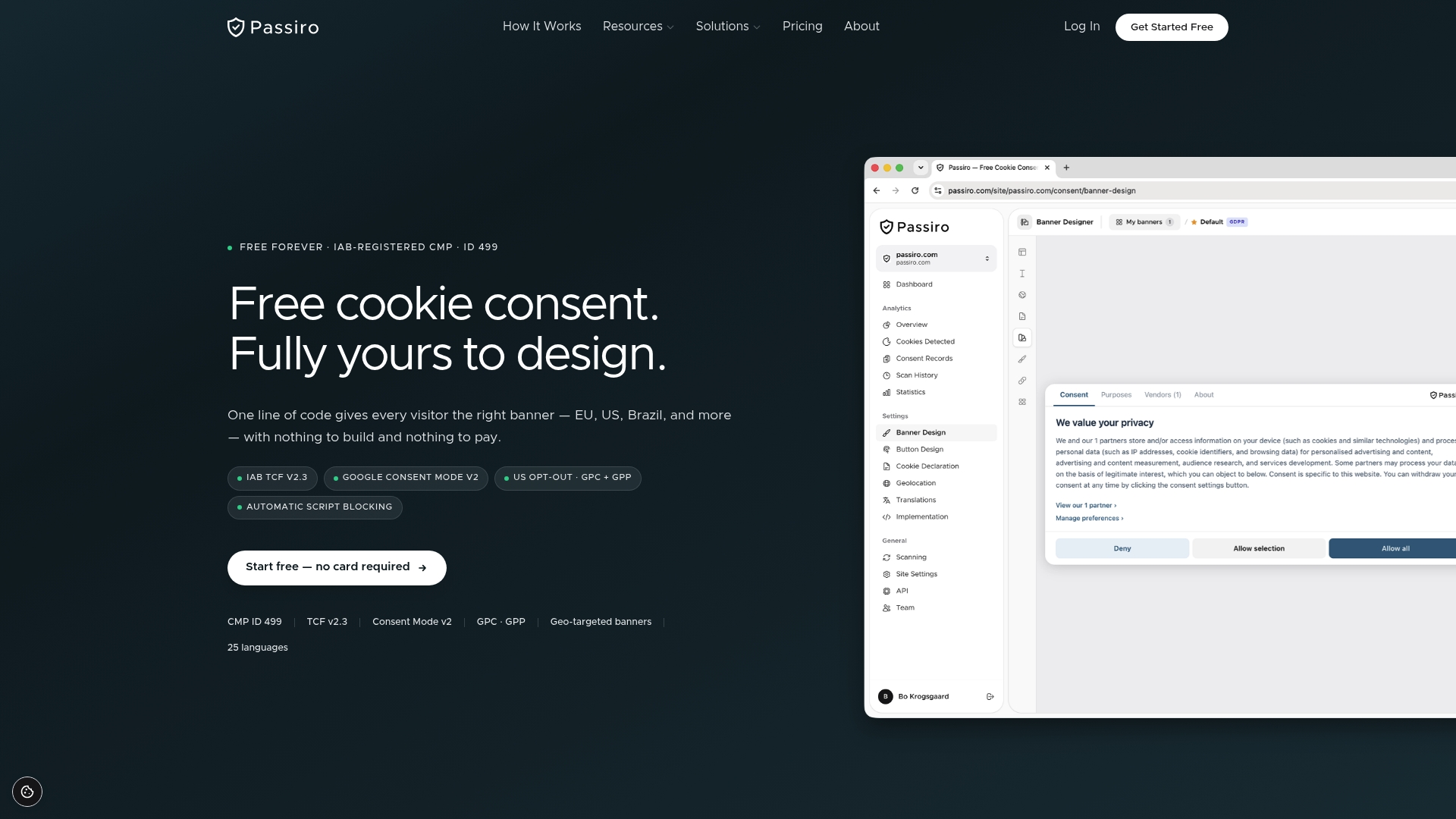
Free access to a multijurisdiction compliance stack that includes support for IAB TCF v2.3 and Google Consent Mode v2. Passiro bundles geo targeted notices, a visual banner designer, and automatic script blocking without per domain licensing. The platform aims to cover GDPR, ePrivacy, and major US privacy laws at no cost.
Core Features
Passiro delivers consent banners with a visual editor that includes templates, gradients, and stock images so teams rarely need CSS changes. The service blocks scripts and trackers before consent is recorded and can serve geo targeted notices and language variants per visitor. According to the company, Passiro includes a database of 4,900+ trackers sourced from EasyPrivacy that is updated daily.
Key Differentiator
Passiro stands out by offering a fully compliant consent architecture with minimal setup and no upfront licensing. The vendor emphasizes out of the box support for TCF and Google Consent Mode while also addressing regional privacy obligations such as GDPR and US state laws. That focus reduces work for agencies that must apply a single policy set across markets.
Pros
Passiro is free for unlimited domains and traffic, which lowers recurring costs for small and medium sized sites and agencies. The banner designer removes common front end bottlenecks by letting non developers craft notices and translations. Automatic script blocking and the tracker database speed compliance audits and reduce manual scanning work, and geo targeted notices let policies match local law and language.
Cons
- Limited customization compared to premium providers, especially around advanced design and bespoke consent flows.
Who It’s For
Passiro fits website owners and digital agencies that need a cost effective consent tool for international compliance. It suits e commerce shops that require TCF support for ad networks and agencies managing many client domains. Hosting providers that want an embeddable compliance option will also find the single snippet setup attractive.
Unique Value Proposition
Passiro’s free licensing model removes per domain fees for agencies managing multiple client sites. That economic model lowers the barrier to deploying uniform consent across portfolios. For teams balancing legal requirements and tight budgets, that change to licensing is the primary operational gain.
Real World Use Case
A European online retailer installs Passiro to serve country specific notices and block advertising scripts until consent is granted. The retailer uses the visual editor to localize banners and the geo targeting to show only applicable regulatory text. The result simplifies compliance workflows while keeping ad tech integrations functional once consent is given.
Pricing
Passiro offers a free forever tier that covers core consent features and unlimited websites. Paid plans add automation, advanced scanning, API access, and branding removal for teams that need programmatic control or white label options. The vendor frames the paid options as add ons rather than required features.
Website: https://passiro.com
CookieYes
At a Glance
CookieYes reports being trusted by over 1.5 million businesses worldwide. According to the company, CookieYes is a Google Certified CMP and supports Google Consent Mode and IAB TCF v2.3. The product centralizes cookie scanning, customizable banners, and automatic blocking of third party scripts across major CMS platforms.
Core Features
CookieYes delivers automated cookie scanning and scheduled detection that locate trackers and classify them by purpose. The platform offers customizable cookie banners in multiple languages, consent logging, and legal policy generators for cookie and privacy text. Deployments work on WordPress, Shopify, Wix, and other CMS platforms while the system integrates with Google Consent Mode and TCF standards.
Key Differentiator
CookieYes stands out for its direct support of industry standards and broad customization controls for banners and blocking rules. That approach helps businesses match consent flows to local rules and marketing stacks. The product combines scanning plus automated blocking with the protocol support needed for tag management and TCF workflows.
Pros
Real time scanning and scheduled scans reduce manual audits and speed up remediation. Flexible banner templates, multilingual support, and CSS control let teams match brand and legal copy without code changes. Integration with Google Tag Manager and Consent Mode plus consent logs and policy generation simplify audit trails and technical enforcement across multiple domains; that figure about wide adoption suggests a mature deployment profile.
Cons
-
Pricing can become expensive for very high traffic websites or multiple domains.
-
The interface can feel complex for users without prior experience in cookie compliance tools.
-
Premium features such as geo targeted banners and scheduled scans require higher tier plans.
When It May Not Fit
Organizations that need those advanced features on the smallest plan will find limitations. Teams without a compliance specialist may face a learning curve during initial setup. Very large enterprises that need vendor managed services or white glove onboarding may prefer a different vendor.
Notable Integrations
-
Google Tag Manager
-
Google Consent Mode v2
-
IAB TCF v2.3
-
Microsoft UET
Who It’s For
CookieYes fits website owners, agencies, and developers who manage cookie consent across country specific sites. Small businesses and startups can use the free or low tier plans to get baseline controls. Agencies running multiple client domains will benefit from the scanning and logging features.
Real World Use Case
An expanding e commerce store implemented CookieYes to deploy country specific banners and block third party scripts until consent. The team used the policy generator to publish legal copy while logs captured consent decisions for audits. Tag management integration kept analytics and marketing tags aligned with consent states.
Pricing
CookieYes uses tiered monthly plans with a free option available. The published tiers list a Basic plan at $10/month, Pro at $25/month, and Ultimate at $55/month, plus a 14 day free trial. Pricing can rise with additional domains and traffic.
Website: https://cookieyes.com
Termly.io
At a Glance
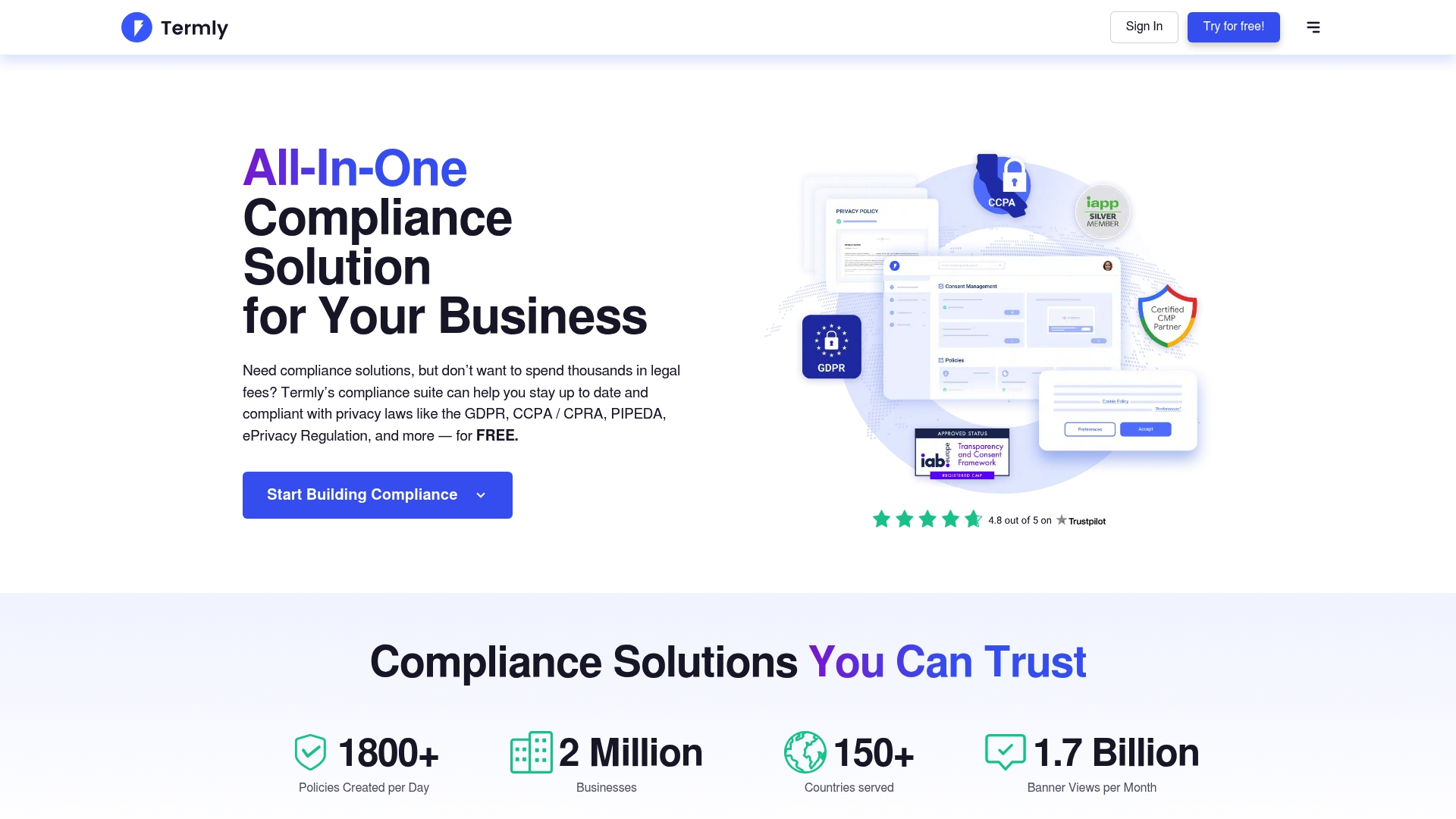
Termly reports serving more than 2 million businesses worldwide. The package pairs attorney-crafted policies with consent tools and a cookie scanner. It focuses on quick implementation through embed codes and automatic legal updates to keep policy text current across sites.
Core Features
Attorney-crafted legal policy templates cover privacy policies, terms and conditions, cookie policies, EULA, disclaimers, and impressum. The platform includes a cookie scanner and consent banners that link to generated policies, and it offers automated compliance updates that revise texts as laws change. Easy embed codes let teams deploy banners and policy pages across multiple domains without developer work.
Key Differentiator
What sets Termly apart is the pairing of attorney-drafted policy text with automated law-change updates. That combination reduces manual policy maintenance and speeds rollout of corrected language when regulators act. The approach fits teams that handle many small sites and prefer template-driven legal coverage rather than bespoke drafting.
Pros
Adoption is straightforward, with templates and embed codes that let nonlegal staff complete setup. The offering supports GDPR, CCPA, and other jurisdictions and reports regular policy updates to reflect legal changes. Lower pricing than hiring outside counsel makes the product attractive to SMBs, agencies, and teams with limited legal budgets.
Cons
-
Policy language customization is limited, so sites needing bespoke legal drafting will hit constraints.
-
Pricing can accumulate across many websites, although Termly advertises bulk discounts for larger counts.
-
Multi-language support and advanced regional compliance features sit behind higher-tier plans for organizations with complex localization needs.
When It May Not Fit
Organizations that require finely tailored contract language or case-specific legal clauses will find Termly restrictive. Large enterprises operating hundreds of domains should model total cost, because site counts increase fees. Teams that need extensive localization or advanced regional controls should budget for higher-tier or custom plans.
Who It’s For
Small and medium businesses, marketing teams, and compliance officers who need affordable policy generation and consent management will gain the most. Agencies that manage multiple client domains can use custom or bulk plans to scale policy rollout. Teams that prefer attorney-written templates over retained counsel will find Termly practical.
Real World Use Case
A small online retailer generated privacy and cookie policies from templates and activated a consent banner tied to the cookie scanner. The scanner mapped cookies to categorize and the platform updated policy text automatically when regulatory guidance changed. The retailer avoided recurring legal retainers while keeping visible consent controls on site.
Pricing
Termly offers a free tier with limited capabilities, a Starter plan at $10/month, and a Pro+ plan at $15/month. Custom plans are available for agencies and larger implementations, and bulk discounts apply when managing many domains.
Website: https://termly.io
Osano
At a Glance
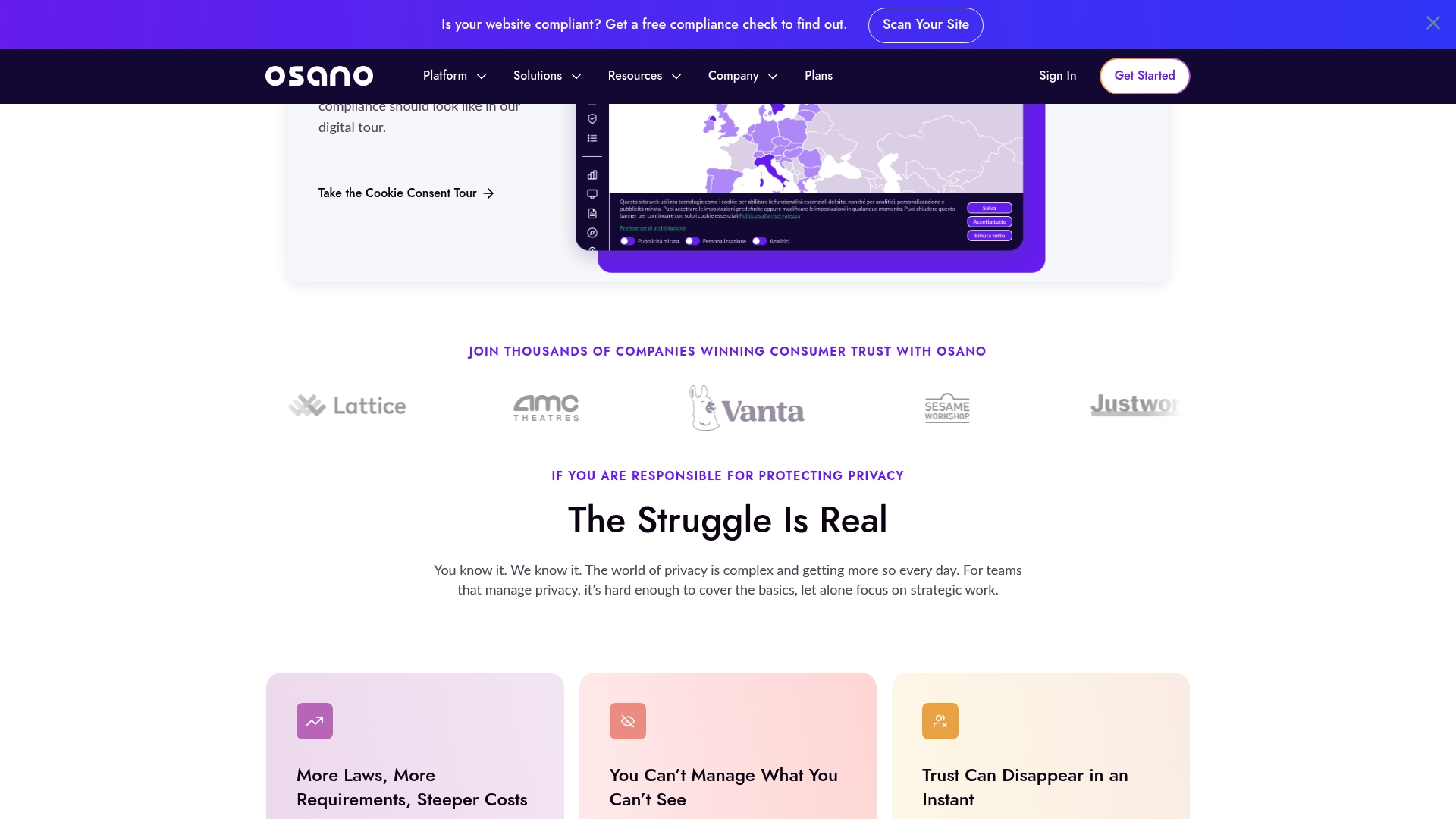
Osano’s marketing materials state a “No Fines, No Penalties” guarantee alongside support for privacy regulations in over 50 countries. The vendor reports thousands of company customers and billions of consent transactions. That scale positions the product toward organizations that must coordinate compliance across regions. Implementation requires active configuration and ongoing maintenance.
Core Features
Osano combines cookie consent management with customizable banners and multi language options, a unified consent and preferences hub, and DSAR automation for subject rights workflows. The platform includes data mapping automation to discover and classify data stores, plus vendor privacy risk management with privacy scoring and breach monitoring. These features work together to cover operational privacy tasks and audit documentation.
Key Differentiator
The single most distinguishing element is that guarantee and the advertised global regulatory coverage. The review above hedged that claim once. That guarantee and broad regional support direct attention to risk transfer and compliance coverage rather than only to banner configuration. Organizations that prioritize demonstrable vendor commitments will see that as a defining factor.
Pros
Osano groups multiple privacy controls into one product so teams do not juggle separate consent, DSAR, and vendor tools. The vendor reports thousands of customers and billions of consent transactions, which suggests experience at scale. Legal and privacy expertise backs the platform and the company publishes pre built regulations for over 50 countries. The guarantee reduces a specific kind of financial exposure for buyers.
Cons
-
The platform’s breadth creates a learning curve for new teams. Expect several setup sessions before processes run smoothly.
-
Initial setup and integrations can be complex for IT teams with limited bandwidth. Planning and testing are required.
-
Vendor and data discovery require active management and periodic updates to remain accurate.
When It May Not Fit
Very small teams with no dedicated privacy resource will likely find the administrative overhead burdensome. Organizations seeking a minimal cookie banner only will pay for capabilities they do not use. Buyers that prefer a turnkey, hands off service model may prefer a lighter product with fewer configuration demands.
Who It’s For
Data privacy teams, compliance officers, legal professionals, and IT teams in mid sized to large organizations that must manage international privacy obligations. Teams that need centralized evidence for audits and cross regional cookie consent will benefit most. Buyers who want vendor risk scoring alongside consent controls will find the feature set relevant.
Real World Use Case
A multinational retailer deploys Osano to standardize cookie consent across websites and mobile apps in the EU, US, and Brazil. The retailer automates DSAR workflows to reduce manual case handling and uses data mapping to visualize personal data flows during audits. The vendor scoring function helps the retailer monitor supply chain privacy risk.
Pricing
Pricing is not publicly listed. Prospective buyers must contact Osano for plan details and to obtain quotes that reflect deployment scope, number of domains, and required modules. Pricing discussions typically follow a product demonstration.
Website: https://osano.com
Comparison of alternatives
Passiro provides a unique balance of cost-efficiency and functionality among the reviewed options for cookie consent management solutions. By eliminating per-domain fees while offering extensive multijurisdictional compliance features, it becomes a preferred choice for cost-conscious agencies and eCommerce shops requiring support.
Pricing and Cost Efficiency
Passiro is the only provider offering a free tier that supports unlimited domains and traffic. Both CookieYes and Termly.io include free plans; however, advanced features and scaling needs may necessitate higher-tier subscription models. Meanwhile, Osano does not publish pricing but caters toward large organizations, implying potentially higher expenses. Passiro’s zero-cost model facilitates full compliance without recurring costs, appealing to budget-sensitive teams.
Advanced Compliance Features
Osano offers superior regulatory coverage and vendor risk management with its privacy scoring, breach monitoring, and DSAR automation. CookieYes provides extensive automation for cookie scanning and integration capabilities with tag management solutions like Google Consent Mode v2. Passiro simplifies initial compliance workflows with its daily updating tracker database but lacks Osano’s elaborate risk management tools.
Best fit
-
Teams needing an entirely free, multilingual, and feature-rich solution for cookie consent management will appreciate Passiro’s offering.
-
Projects requiring automated legal policy template updates as regulations evolve will benefit from Termly.io’s attorney-drafted templates.
-
Corporations prioritizing rigorous vendor and data privacy risk management processes will find Osano aligned with their compliance goals.
-
Agencies demanding cookie scanning coupled with customizable banner deployment across diverse CMS platforms should explore CookieYes.
Our pick
Passiro emerges as the top recommendation for groups requiring economical yet advanced cookie consent management. Its free licensing model coupled with high functionality ensures accessibility even for small-scale operations and agencies handling diverse client requirements. However, Passiro may not suit multinational corporations needing extensive risk assessments, suggesting Osano for those requirements.
Comparing these cookie consent management platforms highlights each solution’s unique strengths for various compliance and policy management requirements.
| Product | Pricing | Primary Use Case | Key Differentiator | Notable Limitation |
|---|---|---|---|---|
| Passiro | Free for unlimited domains | Cost-effective, international-consent tool | Fully compliant features with no upfront licensing | Limited customization for advanced designs |
| CookieYes | Free plan, paid plans from $10/month | Centralized cookie scanning and consent logging | Broad customization for banners and compliance | Pricing increases with traffic and domains |
| Termly.io | Free plan, paid plans from $10/month | Policy generation paired with cookie consent tools | Automated legal text updates with embed codes | Limited policy language customization and localization |
| Osano | Price not published | Comprehensive data privacy and vendor risk management | “No Fines, No Penalties” guarantee | Includes advanced features requiring additional setup |
Addressing Complexity in Cookie Consent Management Platforms
Managing cookie consent for multiple domains while meeting international privacy laws can pose significant challenges for small and medium businesses, agencies, and website owners. The need for compliance with regulations such as GDPR, CCPA, and LGPD often requires a solution that balances comprehensive consent architecture with affordable licensing and straightforward setup.
Passiro meets these demands by offering free access to unlimited domains without per domain fees. It supports key standards like IAB TCF v2.3 and Google Consent Mode v2, combined with an intuitive visual banner designer and automatic script blocking. This balance reduces technical overhead while enforcing precise regional compliance.
Gain clarity on your cookie consent strategy and streamline compliance management by exploring Passiro’s features. Start implementing compliant, geo-targeted consent notices tailored for your portfolio of sites with Passiro’s scalable solution.
FAQ
How does Passiro support GDPR and ePrivacy compliance?
Passiro effectively supports GDPR and ePrivacy compliance through its automatic script blocking and geo-targeted notices. The platform it covers major privacy laws and includes a database of over 4,900 trackers updated daily, simplifying audits for users. This means businesses can manage their consent practices comprehensively and efficiently.
What is the difference between Passiro and CookieYes?
CookieYes provides industry-standard support for customizable banners and automated cookie scanning across CMS platforms. Passiro, in contrast, offers a free solution that requires minimal setup and includes a visual banner designer tailored for those needing quick implementation without upfront costs. This makes Passiro a better fit for users seeking a cost-effective, ready-to-use compliance solution.
Which platform offers more customization for consent banners, Passiro or CookieYes?
CookieYes allows for extensive customization of cookie banners, including flexible templates and CSS control. Passiro’s banner designer offers templates and stock images but has limited customization options, making CookieYes the go-to for users who require greater design flexibility. If your priority is quick compliance without heavy customization, Passiro remains an excellent choice.
Can I use Passiro for multiple client domains?
Yes, Passiro is free for unlimited domains and traffic, making it ideal for agencies managing multiple client sites. This capability alleviates financial burdens typically associated with traditional cookie consent management solutions, supporting businesses in expanding their operations. However, users looking for extensive customization may find limitations in Passiro’s offerings compared to other providers.
How does Passiro handle consent for ad networks?
Passiro integrates functionality to comply with ad network requirements like TCF v2.3 and Google Consent Mode. Its unique design minimizes setup effort, making it suitable for eCommerce shops that need quick compliance solutions to keep advertising integrations operational right after consent is given. This seamless integration significantly benefits businesses navigating complex regulatory environments.
Recommended
Get compliant cookie consent — free
Passiro gives you a compliant cookie banner with IAB TCF v2.3 and Google Consent Mode v2, free on every site.