Top 6 Termly Alternatives for Cookie Consent 2026

Finding a cookie consent management platform with flexible deployment, affordable multi-domain controls, and verifiable compliance features is difficult for agencies and site owners. Many solutions increase costs per domain, restrict white-label or branding options, or require technical integration beyond what small teams can manage. This comparison details six alternatives to Termly so agencies and site owners can weigh pricing, compliance claims, and deployment support before committing.
Table of Contents
Passiro
At a Glance
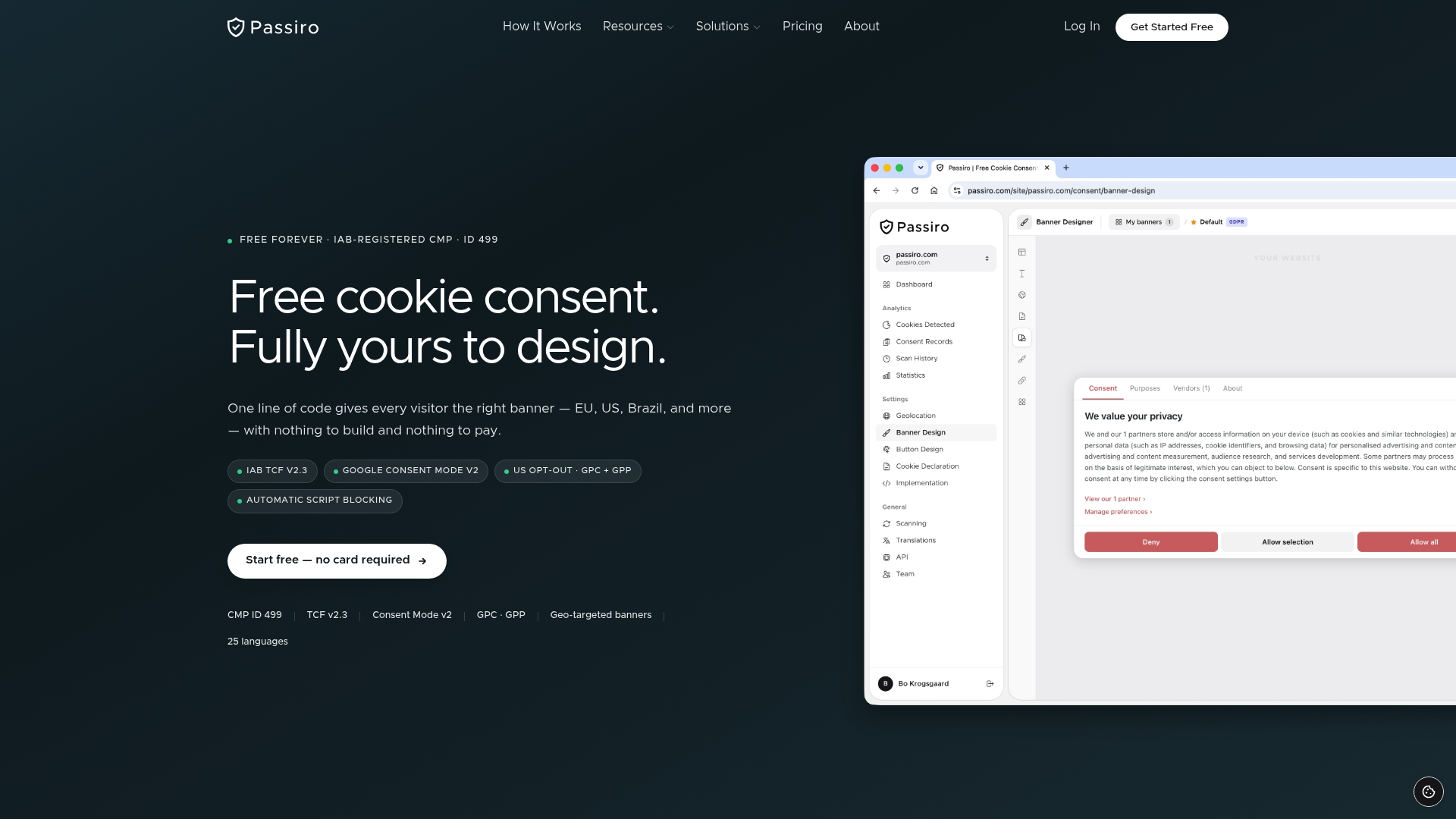
Passiro reports a tracker list of more than 4,900 entries derived from EasyPrivacy. The core platform is free with no page or traffic limits and installs with a single line of embed code. It supports IAB TCF v2.3 and Google Consent Mode v2, and it offers geo-targeted banners and automatic script blocking before consent.
Core Features
Passiro delivers a one-line script embed for fast deployment across CMS and static sites, plus a visual banner editor that handles gradients, images, and fonts without custom CSS. Geo-targeted notices serve region-appropriate text and legal choices, while automatic script blocking delays trackers until visitors grant consent. The platform claims broad legal coverage for GDPR, ePrivacy, US privacy laws, and LGPD in Brazil.
Key Differentiator
Passiro combines an IAB TCF v2.3 compliant consent mechanism with built-in Google Consent Mode v2 support and automatic tracker blocking. That stack runs from a single embed and includes geo-targeting so one configuration can cover multiple jurisdictions. The result is a unified consent flow that requires minimal engineering per domain.
Pros
The free core tier removes page and traffic caps, making it practical for agencies managing many client sites. Visual customization requires no developer work, which speeds deployment for marketers and designers. Automatic blocking uses the reported tracker database to prevent scripts from firing before consent, reducing manual tag management and legal exposure.
Cons
- Advanced analytics, API access, white-label branding, and automated cookie scans require paid plans.
Who It’s For
Webmasters, digital agencies, e-commerce stores, trade associations, and site builders who need a low-cost compliance option will find Passiro relevant. It suits teams that manage multiple domains and want a consistent consent string across regions. It also fits small operations that lack developer resources for custom banner code.
Unique Value Proposition
The free core tier includes automatic script blocking plus geo-targeted banners delivered from a single embed, avoiding separate vendor scripts per region. That design lowers per-site operational cost and reduces repetitive setup for agencies managing portfolios. For teams that prioritize predictable billing and fast rollouts, the free tier reduces subscription overhead.
Real World Use Case
A regional e-commerce retailer deploys the one-line embed across product sites and enables geo-targeted banners for EU countries, US states, and Brazil. Automatic script blocking stops marketing and analytics tags until customers grant consent, which simplifies legal mapping for in-house counsel. The retailer runs the setup without platform fees while adding paid features later for analytics and branding.
Pricing
Passiro offers a free core platform with no page or traffic caps and optional paid tiers starting at €9/month for upgrades. Paid plans add API access, white-labeling, advanced scans, and reporting, with enterprise contracts available from €299/month. Pricing is listed in euros.
Website: https://passiro.com
CookieYes
At a Glance
CookieYes reports being used by over 1.5 million businesses globally, a figure the vendor presents on its marketing materials. The product focuses on automated consent capture, cookie scanning, and multi language banners for sites operating across markets. That combination makes it a quick option for teams that need basic compliance tooling without building from scratch.
Core Features
CookieYes offers customizable cookie banners with multi language and geo targeting options, plus a revisit consent widget for user control. The service performs automated cookie scanning and categorization and can block cookies until users give consent. It records consent logs, generates legal policies, and integrates with Google Consent Mode and IAB TCF v2.3 for standard consent flows.
Key Differentiator
According to the company, CookieYes is a certified partner with Google CMP, IAB TCF, and ISO standards. That certification claim supports its emphasis on working with industry consent frameworks and measurement tools. The vendor pairs those certifications with multi language support and geo targeting to handle sites in multiple jurisdictions.
Pros
Deployment is simple and often requires a single line of code, which reduces initial engineering time. Automated detection, categorization, and cookie auto blocking cut manual maintenance for consent rules and scripts. Multi language banners, geo targeting, and documented consent logs help provide a defensible audit trail for privacy teams and legal reviews.
Cons
-
Free tier limits may leave high traffic sites needing paid plans.
-
Advanced customization such as custom logos and CSS requires higher tier plans.
-
Multiple domains can raise costs beyond the entry level.
-
Some users report a technical setup curve if they lack web development experience.
When It May Not Fit
Sites that need full white label branding or custom CSS will find those options locked behind higher plans. Teams that require scheduled scans and advanced reporting should expect enterprise level pricing. High volume operations may exceed free pageview and scan limits and face unexpected costs.
Notable Integrations
-
Google Tag Manager
-
IAB TCF v2.3
-
Microsoft UET
-
Google Consent Mode
Who It’s For
Small and medium sized businesses that need a fast, configured consent banner and basic compliance tooling will benefit from CookieYes. Agencies managing multiple client sites that accept standard consent frameworks will find the integrations useful. Enterprises with complex customization needs may need higher tier plans.
Real World Use Case
An online retail site deploys CookieYes to scan pages, classify trackers, and block marketing scripts until consent is given. The site uses multi language banners and geo targeting to present the correct policy text per market. Consent logs support the retailer during periodic compliance reviews.
Pricing
CookieYes offers a free tier for basic features. Paid plans start at $10/month and rise to $55/month per domain, with customizable enterprise solutions available for larger needs. Exact tier limits for pageviews and scans vary by plan and require checking the vendor pricing page.
Website: https://cookieyes.com
iubenda
At a Glance
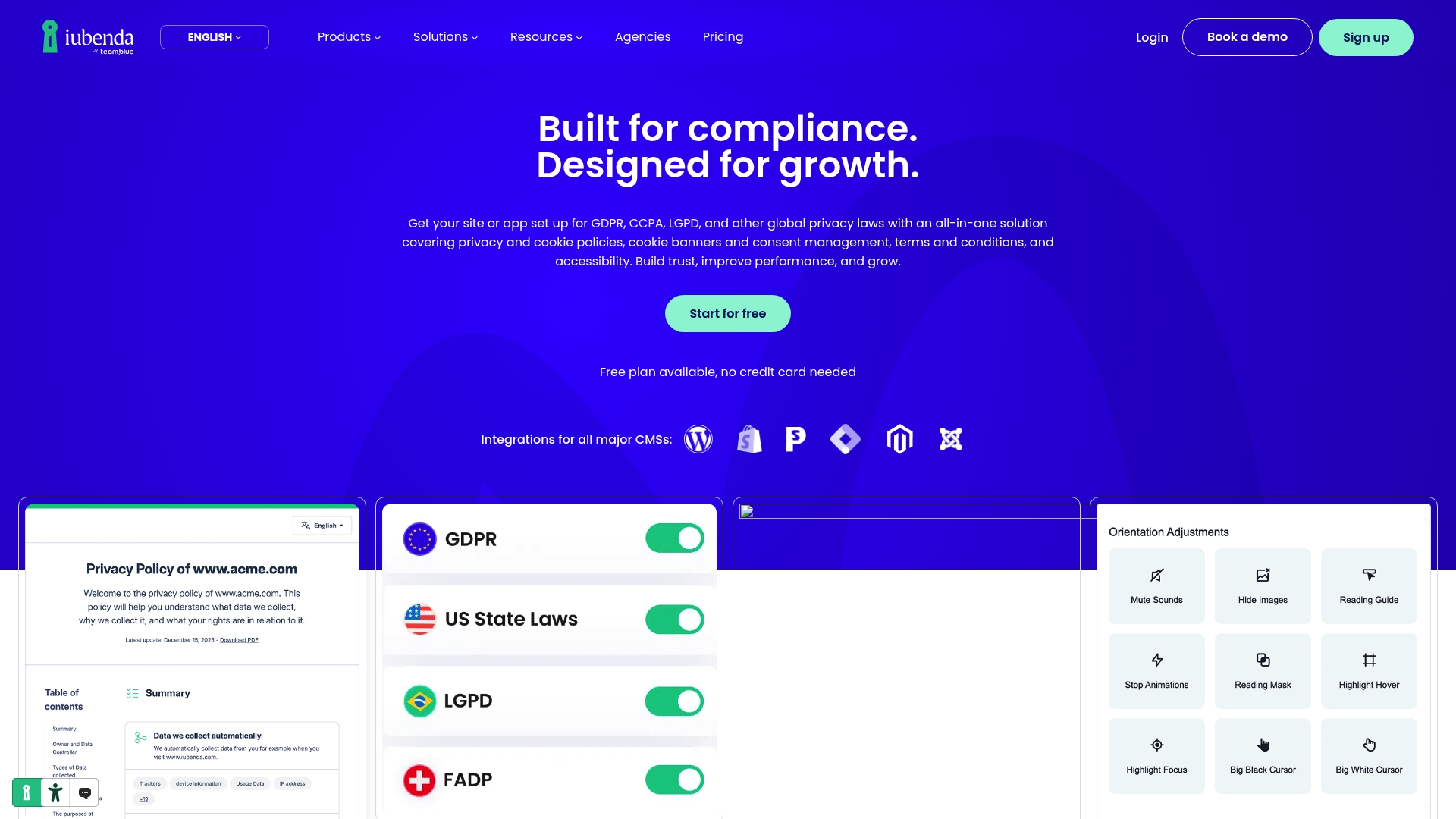
iubenda reports it is trusted by over 150,000 organizations. The product combines cookie banners, legal document generation, automated scans, and compliance monitoring for websites and mobile apps. The vendor advertises certifications that include a Google-certified CMP status and IAB validation.
Core Features
The platform generates lawyer-drafted privacy and terms documents that update automatically as laws change. It runs automated website scans, provides consent management with logs, and adapts banners by visitor location while supporting Google Consent Mode v2 and IAB TCF 2.2. Additional functionality includes mobile SDKs, analytics, consent recovery, and a compliance dashboard with reporting.
Key Differentiator
The distinguishing feature is its combination of legally reviewed documents plus multi-region consent controls that update automatically. That pairing targets teams that must keep policy text and consent mechanics synchronized across jurisdictions and languages.
Pros
Support for multiple legal frameworks and automated updates reduce manual tracking work for teams that operate across regions. The platform offers lawyer-drafted documents in several languages and a consent engine that logs choices and connects to tag managers. According to the company, the product carries recognized industry certifications and a large reported user base, which can matter when documenting vendor due diligence.
Cons
- Interface complexity can slow onboarding for teams without dedicated privacy resources.
- Pricing may feel high for very small startups on tight budgets.
- Advanced analytics, white-labeling, and deep customization require higher-tier plans.
When It May Not Fit
Small teams without a dedicated compliance lead will find the setup and policy customization time consuming. Organizations that only need a basic banner and script blocking with minimal legal documentation may prefer a simpler, lower-cost tool. Agencies that need per-client lightweight widgets rather than full legal drafting should evaluate administrative overhead and cost per site.
Notable Integrations
Connects with WordPress and Shopify for quick installs. Works with Google Tag Manager and exposes APIs for custom integrations and server-side setups.
Who It’s For
Businesses, agencies, and organizations that require region-specific legal text and consent controls across many sites or apps. Legal teams that want lawyer-drafted policies with automated updates will find the document workflow useful. Companies that need multi-language support and enterprise reporting will get the most value.
Real World Use Case
A European e-commerce company uses iubenda to produce GDPR and ePrivacy policy pages, deploy location-aware consent banners, and keep policy text current when regulation changes. The consent logs feed analytics and a tag manager so marketing tags only fire after consent is recorded.
Pricing
A free plan is available for basic use. Paid plans start from 4.99 EUR/USD per site per month and scale to enterprise solutions with custom pricing for high-volume or heavily customized deployments.
Website: https://iubenda.com
Cookie Information
At a Glance
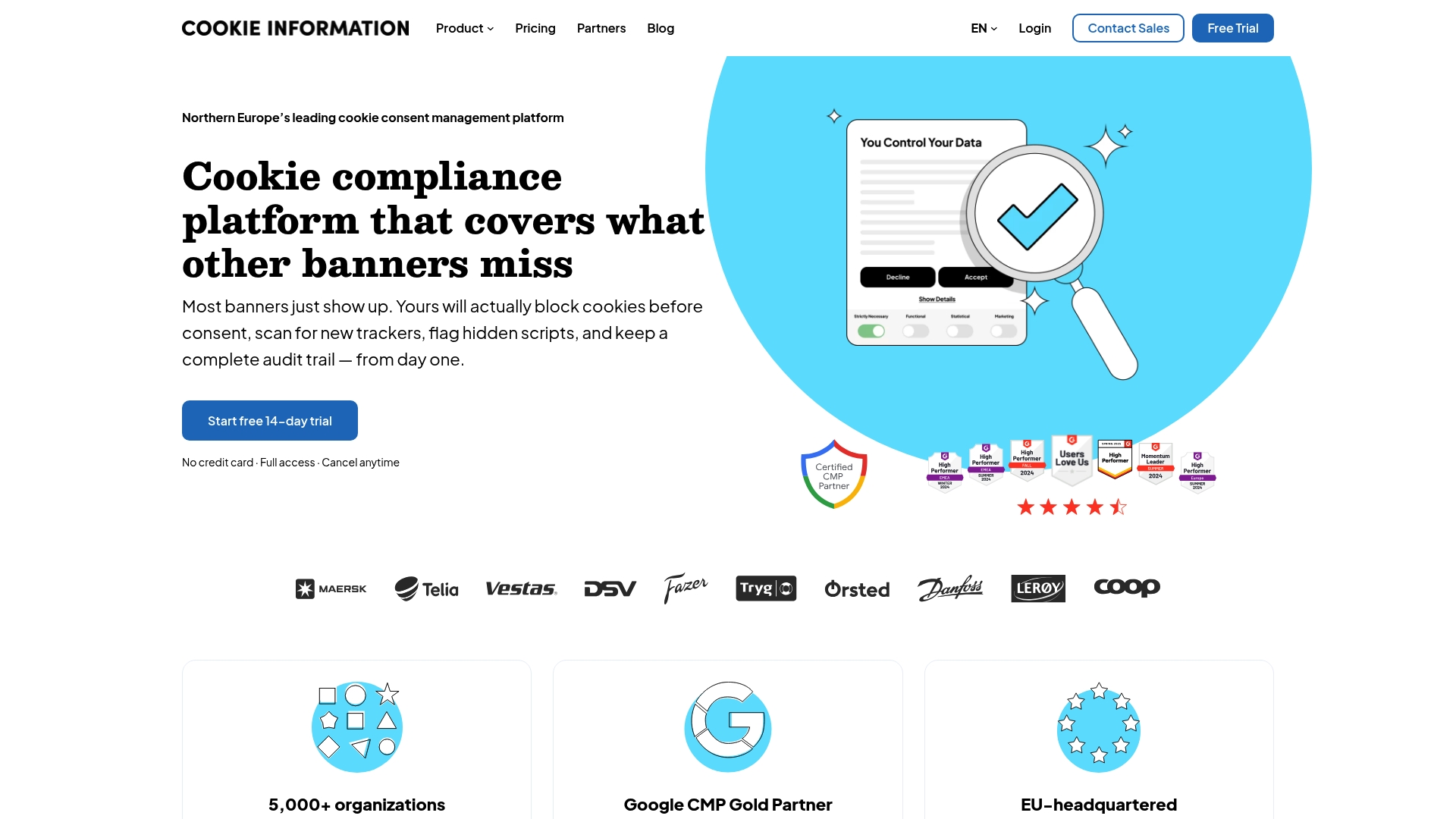
Cookie Information reports being trusted by over 5,000 organizations across Northern Europe. The vendor advertises status as a Google CMP Gold Partner and EU-based hosting. That combination supports local data control while allowing anonymous data recovery and ongoing compliance checks.
Core Features
The platform pairs automatic cookie scanning and blocking before consent with a complete audit trail of cookie management activities. It includes native support for Google Consent Mode v2 and performs regular compliance audits to reflect regulation changes. The product ties consent management into analytics and tag management for a single operational view.
Key Differentiator
Cookie Information emphasizes automated compliance updates plus anonymous data recovery to preserve analytics without identifying visitors. The approach targets organizations that must manage consent across many sites while keeping data hosted in Europe. That focus narrows its appeal to multi-property operations rather than single-site hobby projects.
Pros
Automates routine tasks such as scanning and blocking scripts, which reduces manual tracking and paperwork. The platform helps recover measurement by using anonymous signals when visitors decline cookies, improving analytics without identifying individuals. EU-based hosting supports data sovereignty for organizations that require local storage and controls.
Cons
- Buyers must understand compliance nuance to configure rules correctly for different jurisdictions.
- Higher-tier plans can be expensive for small businesses with a single domain.
- Initial setup requires time on complex sites with many third-party tags.
When It May Not Fit
Organizations that run only one small website and lack a privacy team may find the platform heavier than needed. Single-site owners who want a plug-and-play banner without audits or hosting controls will likely prefer simpler tools. Agencies handling dozens of client domains will get the most value from its scale.
Who It’s For
Businesses and public organizations operating multiple websites across Europe that need strict cookie compliance, audit trails, and analytics continuity. Teams that must keep data within EU jurisdictions and that coordinate legal, marketing, and engineering workstreams will benefit most. Smaller sole proprietors are a less natural fit.
Real World Use Case
A European retail chain deployed Cookie Information across several country sites to centralize consent rules and run automated audits. That rollout preserved regional data residency and recovered anonymous engagement metrics from visitors who declined tracking. Marketing and legal teams used the audit trail during a regulatory review.
Website: https://cookieinformation.com
Consentua
At a Glance
Consentua can be deployed on-premises or in the cloud to provide a consent layer across the customer journey. It captures consent at multiple touchpoints, stores detailed records, and exposes consent signals for marketing and operations. The vendor states this setup aims to support GDPR and ePrivacy compliance while using consent to qualify leads.
Core Features
Consentua captures consent throughout the customer journey and stores timestamped records with purpose metadata for audit trails. It offers real-time control over data processing and a robust API that ties consent signals to downstream operations and marketing workflows. Built-in analytics surface consent trends and produce documentation suitable for compliance reviews.
Key Differentiator
The vendor advertises that Consentua surpasses GDPR requirements and expectations while offering flexible deployment in cloud or on-premises environments. That claim pairs with deep consent analytics and an API-first design to make consent actionable across systems. This combination gives compliance teams operational control and a traceable consent history for audits.
Pros
Flexible deployment supports both cloud and on-premises installations, which suits organizations with strict data residency or security policies. Detailed consent tracking produces timestamped records, purpose tags, and audit-ready logs for compliance teams. Purpose-based collection and real-time control help align marketing processes with consented uses and improve customer transparency.
Cons
- No clear third-party guidance lists buyer scenarios where Consentua is unsuitable, which leaves some procurement questions unanswered.
- Integration may require technical resources, so small organizations without developer support could face a steeper setup curve.
- Public information about pricing is limited, so budget planning requires direct vendor contact.
Who It’s For
Organizations that need enterprise-grade consent management and want both cloud and on-premises deployment options will find Consentua relevant. It fits compliance teams that must produce audit-ready consent records and marketing teams that want consent signals for targeting. The product targets businesses of various sizes that can dedicate technical resources to integration.
Real World Use Case
A retail website integrates Consentua to capture consent across web and mobile checkout flows and to store purpose-tagged consent records. The consent layer provides evidence for auditors and feeds consent signals into the CRM for personalized promotions. The result is demonstrable consent handling and clearer marketing segmentation.
Pricing
Pricing is not publicly listed. The product entry lists pricing as not applicable and informational only, so vendors must be contacted for quotes and licensing details. Procurement teams should request deployment and support cost breakdowns during vendor evaluation.
Website: https://consentua.com
Enzuzo
At a Glance
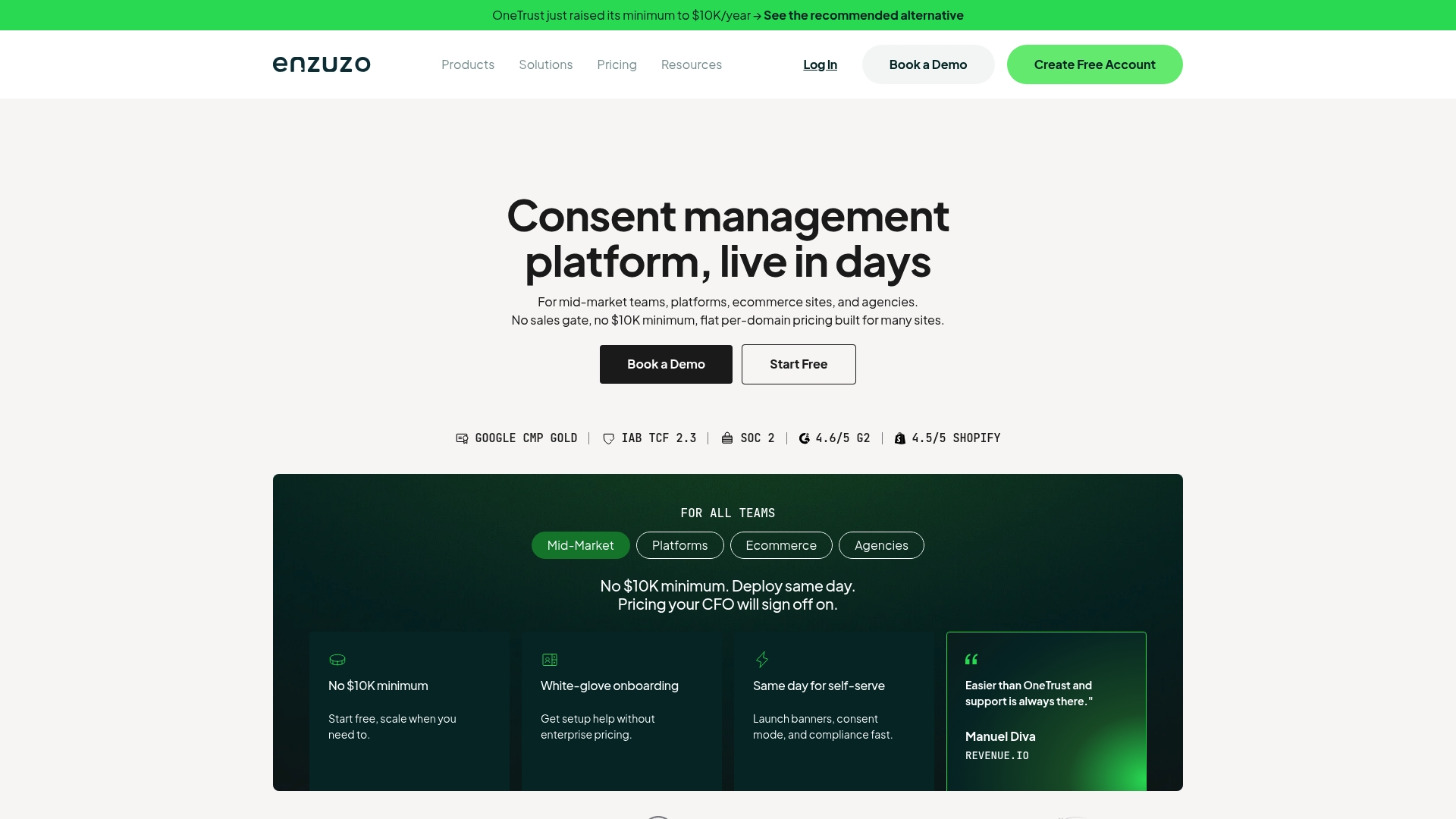
Enzuzo reports being trusted by over 30,000 businesses worldwide. The vendor advertises same-day self-serve setup and one to two weeks with onboarding support for teams that request white glove assistance. The product targets mid-market e-commerce sites, platforms, and agencies that need consent controls, policy generation, and multi domain management.
Core Features
Enzuzo bundles consent management, legal policy generation, and data subject request workflows into a single dashboard, with a native Shopify app so shops do not need code or Google Tag Manager. The platform advertises flat-rate per domain pricing and API support for automated compliance across multiple domains. Reporting includes real-time consent analytics and multi language support for regional deployments.
Key Differentiator
The clearest selling point is flat-rate, per domain pricing that avoids per site implementation fees. That pricing model aims to remove per-site billing complexity for agencies and mid-market teams. For organizations managing several client sites, the vendor positions this as cost predictable billing compared with per-website charges.
Pros
Enzuzo is affordable for mid-market teams and reports ease of deployment even when technical resources are limited. The native Shopify App removes manual tag management for many stores, and the platform supports Google Consent Mode v2 for consent-aware measurement. Multi domain management from a single dashboard and white glove onboarding are useful for agencies handling client portfolios.
Cons
- Full multi domain management requires a bespoke arrangement rather than a fully self serve model, which adds procurement steps.
- Public information is limited on advanced customization capabilities, making deep visual or behavioral changes harder to evaluate beforehand.
- Pricing varies by traffic and domain counts, which can complicate budget forecasting for sites with volatile visitor numbers.
When It May Not Fit
Organizations that need immediate, fully self serve multi domain setup may find the bespoke requirement restrictive. Teams that expect extensive UI customization without vendor involvement should verify capabilities before committing. Projects that require a hands-off, fixed monthly fee regardless of traffic spikes might prefer a clearer traffic-insensitive plan.
Notable Integrations
- Shopify App
- Webflow Cookie Consent Plugin
Who It’s For
Mid-market e-commerce sites, SaaS platforms, and digital agencies that manage multiple client domains will find the pricing model and onboarding options compelling. Organizations that rely on Shopify and prefer a low code install path benefit most. Businesses requiring an out-of-the-box consent flow with policy generation also align with the product.
Real World Use Case
A digital marketing agency used Enzuzo to centralize consent for a roster of retail clients. The team deployed the Shopify app for storefronts and used the multi domain dashboard to track consent rates and manage legal policies across regions. White glove onboarding helped accelerate initial setup and client handoff.
Pricing
A free plan is available. Paid plans begin at $7/month billed annually, with higher tiers adding domains and visitor limits. Enterprise options are custom priced and intended for larger or bespoke multi domain arrangements.
Website: https://enzuzo.com
Comparison of alternatives
Passiro distinguishes itself through unlimited free-tier deployment across any number of domains, a feature by its competitors. While other platforms offer specialized functionalities tailored to distinct organizational needs, Passiro provides an affordability edge for diverse sectors.
Deployment Complexity and Scalability
Passiro simplifies deployment with a single-line embed that works across CMS and static websites, allowing agencies and proprietors to cover compliance obligations efficiently. In contrast, Consentua’s detailed configuration can benefit enterprises that desire granular audit trails but may overwhelm smaller teams during setup.
Regional Hosting and Data Sovereignty
Cookie Information offers EU-based hosting coupled with anonymized analytics recovery, addressing demands for regional compliance and continuity in analytics even when cookies are declined. Passiro, lacking specific hosting provisions, is less tailored for organizations prioritizing strict European data residency requirements.
Best fit
- Unlimited domain management: Passiro supports webmasters and agencies handling numerous domains via its unrestricted free-tier offering.
- Strict EU-hosting needs: Cookie Information meets the needs of organizations requiring localized hosting options and detailed analytics safeguards.
- Lawyer-drafted compliance documentation: iubenda provides legally sound privacy texts and automated updates, suitable for compliance-focused legal teams.
- Multi-domain Shopify integration: Enzuzo pairs consent and legal tools with Shopify compatibility for e-commerce platforms.
- Flexible deployment options: Consentua’s on-premises installation enables control for enterprises with specialized hosting demands.
Our pick
Passiro is most advantageous for operations that manage numerous websites yet seek to minimize compliance tool spending. The one-line embed code, unlimited domain allowance, and multi-regional workflow designed to support regulation compliance make it a practical choice for agencies overseeing client portfolios. However, entities that prioritize dedicated European hosting or require lawyer-drafted policy texts might find competitor offerings more aligned with their needs.
Passiro is optimized for seamless integration with minimal developer effort while offering comprehensive compliance support.
| Product | Core Features | Key Differentiator | Best For | Pricing | Notable Limitation |
|---|---|---|---|---|---|
| Passiro | Geo-targeted banners, script blocking | Single embed covers multiple jurisdictions | Agencies and e-commerce managers | Free core, €9+/month | Advanced features require paid plans |
| CookieYes | Automated consent, multi-language banners | Certified integration with Google/IAB | Small/medium-sized businesses | Free tier, $10+/month | Lacks free tier scalability for high-traffic sites |
| iubenda | Legal document generation, compliance monitoring | Lawyer-drafted auto-updating documents | Agencies needing extensive legality | €4.99+/month | Setup complexity may hinder small teams |
| Cookie Information | Automatic cookie scanning and blocking | EU hosting and anonymous data recovery | European organizations, multi-site operators | Price not published | Setup complexity for single-site owners |
| Consentua | Audit-ready, API support for consent signals | GDPR compliance readiness with real-time tracking | Enterprise compliance teams | Price not published | Requires technical resources for integration |
| Enzuzo | Consent management, data request workflows | Flat-rate pricing per domain | Mid-market e-commerce and agencies | Free tier, $7+/month | Bespoke setup for multi-domain management |
Challenges in Choosing Termly Alternatives for Cookie Consent Management
Managing cookie consent across multiple websites and jurisdictions often creates challenges for small businesses, agencies, and site owners. Many solutions add complexity or cost without addressing the need for flexible compliance support tailored to GDPR, CCPA, and LGPD. Users demand simple deployment that balances legal frameworks with effective script blocking and geo-targeted banners.
Passiro meets this challenge by providing a no-cost, scalable cookie consent system designed specifically for these needs. Its registered IAB TCF v2.3 CMP, Google Consent Mode v2 integration, and automatic script blocking support compliant consent flows across all your domains without traffic or page limits. Passiro’s visual banner editor and updated tracker list simplify managing consent across regions and languages.
Gain clarity on consent management with Passiro’s free tier, designed to support your multi-site operation without recurring fees. Visit Passiro to see how the platform handles consent essentials and consider upgrading for advanced analytics or white labeling. Start managing consent with a single embed script and access geo-targeted banners tailored for your audience.
FAQ
How does Passiro support multiple languages for cookie consent management?
Passiro supports 25 languages, making it an effective choice for businesses operating in diverse markets. The platform’s geo-targeted banners help present the appropriate legal text based on the user’s region. This feature is vital for businesses looking to ensure clarity and compliance across different audiences.
What is the difference between Passiro and CookieYes?
CookieYes excels in automated cookie scanning and categorization, which minimizes manual upkeep for consent compliance. In contrast, Passiro provides automatic script blocking and geolocation capabilities within its consent mechanism. This makes Passiro a better fit for teams that need a broad legal coverage approach while managing multiple domains effortlessly.
Can I use Passiro if my website does not require advanced analytics?
Yes, Passiro is suitable for basic compliance needs without requiring advanced analytics features. The platform’s core offerings, such as automatic script blocking and geo-targeted banners, are ideal for those who need straightforward cookie consent solutions. Users can start with Passiro’s free tier, which allows unlimited domains and traffic without the need for complex analytics setups.
Does Passiro allow for geo-targeting of consent banners?
Yes, Passiro offers geo-targeted banners which present appropriate legal choices based on the user’s location. This is important for meeting varying legal obligations across jurisdictions, particularly under regulations like GDPR and CCPA. Utilizing this feature helps ensure that users receive relevant information according to their specific legal environment.
How does Passiro’s pricing compare with other cookie consent management solutions?
Passiro features a free tier with unlimited domains and traffic, which sets it apart from many other cookie consent management platforms that often charge for basic features. For those needing additional functionalities, paid plans start at €9/month, allowing organizations to selectively expand features as needed without a significant upfront commitment. This approach facilitates budget management for agencies or teams managing multiple websites.
Recommended
Get compliant cookie consent — free
Passiro gives you a compliant cookie banner with IAB TCF v2.3 and Google Consent Mode v2, free on every site.